Leave Your Message
The global beverage industry is undergoing a paradigm shift, moving rapidly from simple hydration solutions to complex, multi-sensory consumption experiences. At the heart of this transformation is the advanced use of Jelly Stabilizer For Beverage Formulation. These sophisticated hydrocolloid systems—often comprising precise blends of agar, carrageenan, pectin, gellan gum, and xanthan gum—are critical for creating the unique textures found in modern ready-to-drink (RTD) teas, boba alternatives, drinkable jellies, and texturized plant-based milks. As consumer demand for "chewable beverages" and visually striking suspended particles grows, the engineering behind beverage stabilizers has become an intersection of food science and high-tech rheological modeling.
Industrially, the demand for texturizing agents has surged, particularly in the Asia-Pacific and North American markets. Beverage manufacturers face immense pressure to scale up production while maintaining batch-to-batch consistency. Jelly stabilizers play a pivotal role here by ensuring that inclusions (like nata de coco, fruit bits, or jelly cubes) remain uniformly suspended throughout the product's shelf life, preventing unsightly sedimentation. Furthermore, the supply chain for raw hydrocolloids has necessitated the development of highly efficient, synergistic blends that reduce overall dosage requirements while maximizing functionality, leading to significant cost-in-use optimizations for large-scale bottlers.
The future of beverage formulation is being shaped by AI-assisted predictive modeling and clean-label initiatives. Formulators are now utilizing computational rheology to predict how different jelly stabilizers will behave under extreme processing conditions, such as Ultra-High Temperature (UHT) pasteurization or high-shear homogenization. Another massive trend is the shift away from animal-derived gelatin towards plant-based alternatives. Modern jelly stabilizers utilize engineered gellan and pectin networks to mimic the melt-in-mouth feel of traditional gelatin, catering to the booming vegan and flexitarian demographics without compromising on sensory attributes.
Deep-diving into specific scenarios, jelly stabilizers must be custom-tailored to the beverage's matrix. In acidic dairy beverages, protecting milk proteins from denaturation at low pH is crucial; stabilizers form a protective steric layer around casein micelles to prevent coagulation. In fruit and vegetable juices, thixotropic gels are employed—these gels thin out when the beverage is shaken or consumed, allowing for easy drinking, but quickly rebuild their structure at rest to keep pulp suspended. For plant-based protein beverages, stabilizers overcome the chalky mouthfeel of pea or soy isolates, imparting a creamy, smooth texture that rivals traditional dairy.
To truly understand the value of a high-quality Jelly Stabilizer For Beverage Formulation, one must look at the microscopic interactions. Syneresis (the expulsion of water from a gel network) is a common defect in poorly formulated jelly drinks. Advanced stabilizer systems combat this by utilizing synergistic hydrocolloid interactions—for example, the combination of xanthan gum and locust bean gum. While neither forms a strong gel on its own, together they create a robust, cohesive network that tightly binds water molecules. This not only prevents syneresis over a long shelf life but also allows formulators to control the exact "bite" and "chewiness" of the beverage inclusions.
Moreover, the integration of these stabilizers must account for the thermal history of the beverage. During UHT processing, temperatures can exceed 135°C for a few seconds. A premium jelly stabilizer maintains its structural integrity through this thermal shock, ensuring that the final viscosity is achieved only after the beverage cools, thus avoiding fouling in heat exchangers during production. This level of precision engineering is what separates standard thickeners from specialized beverage formulation stabilizers.
Nanchang Tellcan food Science Co., Ltd (hereinafter referred to as Tellcan Food), founded in 2001, is an excellent practitioner of compound food additives and food essence, specializing in the research and development, production and sales of food additives, and the research and development of food technology and food technology. Various types of compound food additives, edible essence and spices produced by Tellcan Food can be used in many fields such as food, beverage and dairy products.
Read more
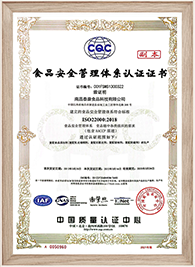
The company has implemented and maintains the HACCP 22000 Food Safety Management System, ensuring reliable products and services. To date, Tellcan has resolved technical challenges for thousands of domestic enterprises and earned prestigious recognitions.
 Council Member of China Food Additives Production and Application Industry Association Standing Council Member of Jiangxi Food Additives Association Member of China Dairy Products Industry Association Member of China Bakery & Confectionery Supplementary Materials Industry Association Member of China National Federation of Industry & Commerce Bakery Association Premium Products & Global Sourcing